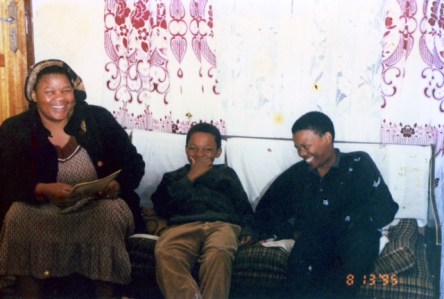
We were well into the first week since Papa’s well-attended funeral. My other mothers had washed his clothes; even clean ones! Mothers that I comprehensively understood how close they were to me – particularly during the funeral preparations, and during the washing days. Some of the mothers included: my father’s cousins; my father’s aunties; his cousin’s wives; my mother’s cousins and my grandfather’s cousin’s wives. My mother was at home; her mother was close by with her, with us. I was still in shock, still at home, where I would be for the next 5 months – the longest I have been since the year 2000.
After Papa’s clothes had dried, I helped my mother in distributing the garments to the various relatives: close and ”distant” families. I learned a lot during this process and I utterly appreciated my culture even more. My mother said something to me, very confusing back then: ”nako dingwe o ka bona phenyo mo bosuleng” (sometimes one can find victory in defeat). It was not until about 5 years later that I knew exactly what she was lecturing about.
I vividly remember one sunny afternoon; there were few elderly men around the fire at the Kgotla: the open space adjoining the front of the kraal – about 150 metres from our house. Elderly men always sit around the fire during funerals and weddings – even if it’s hot, there would be some kind of fire! The men would come around 7-9 in the morning, generally there would be a core group of about 5 that is always there; and most would stop by briefly at some point during the day. That afternoon, a small number of mothers were at home. Keeping my mother company: talking, laughing, cleaning and cooking. I helped them with serving the elderly men lunch. At first, I went to check how many there were: 1, 2, 3, 4, and 5, I counted. About five minutes later I brought the delicious food to the now four elders. The other ”madalas” confirmed that number 5 had left for his home. I was very disappointed.
The following day: I was relaxing in the veranda, where I could perfectly recognise most passer-byes’ faces – even from 100 metres. From the roofed open space, while still wondering and questioning the cruelty of death; I saw him, a wooden walking stick in one hand, marching in the scorching sun on the gravel road. I did not think twice – I sprinted like I used to while at primary school: carefree – with only the aim of getting to my destination! It was the Madala who missed his lunch the previous day. I greeted him, I reminded him of his ‘plate’. He smiled; he followed me to my father’s house. He sat in the sitting room while I was in the kitchen warming up a full plate of the seswaa meat. I served him the shredded meat with Oros, the juice drink.
He enjoyed the meat. During the nibbling, my mother’s mother joined us; they knew each other, very well. In the sitting room: I came to realise that this Madala, left his cattle post immediately upon hearing about my father’s passing. I came to realise that this Madala was friends with my father’s father, my late grandfather! I came to realise, that this Madala knew my father’s grandfather very well: “Ranthobe! Ranthobe!” He shouted and praised me; upon realising I am the late Lekgoanyana’s son. I’m told Ranthobe (Sebetlela) was my great grandfather. I was very happy. I was validated. I was freed. My extension was confirmed.
I was disappointed to learn of the Madala’s passing couple of years ago. However, I also know that he ‘met’ my father, his father and grandfather and narrated in detail of our historic and blessed encounter.
I sincerely thank the Madala.
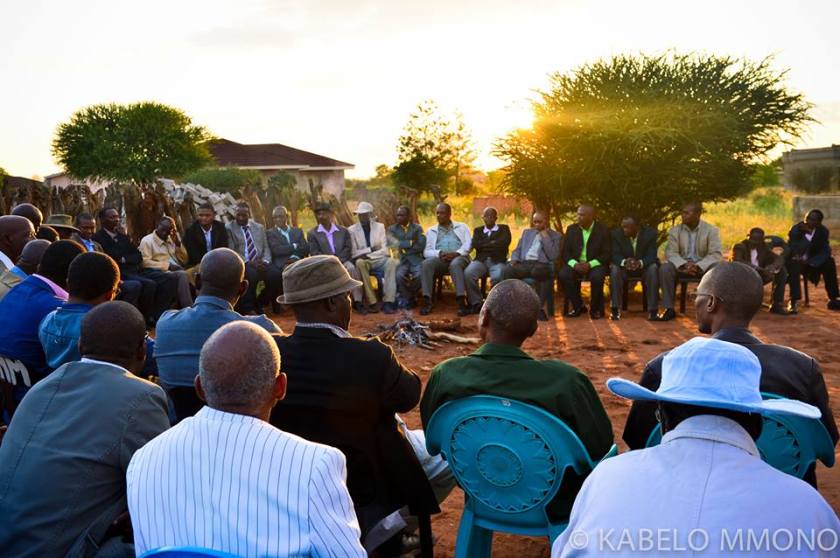
The Madalas at the Kgotla.
Photo: Kabelo Mmono Photography.


