
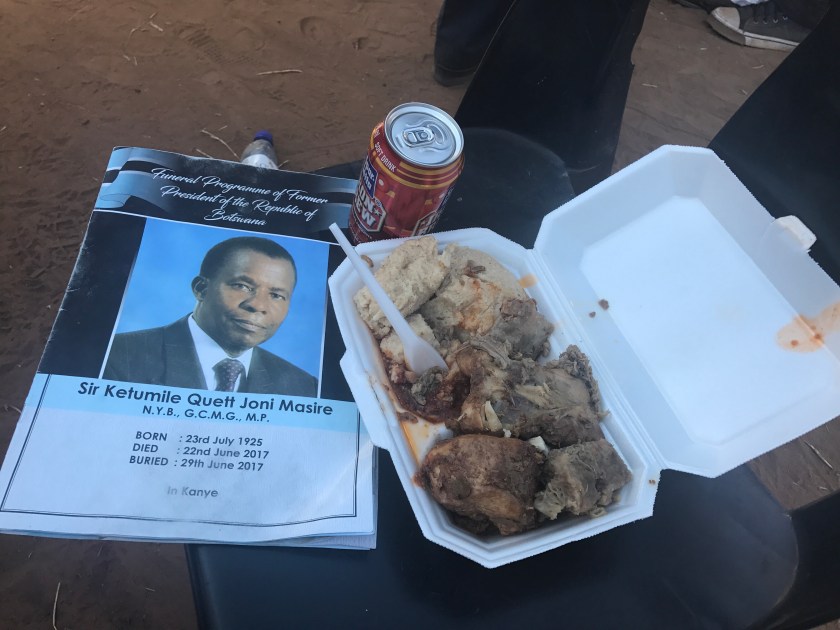
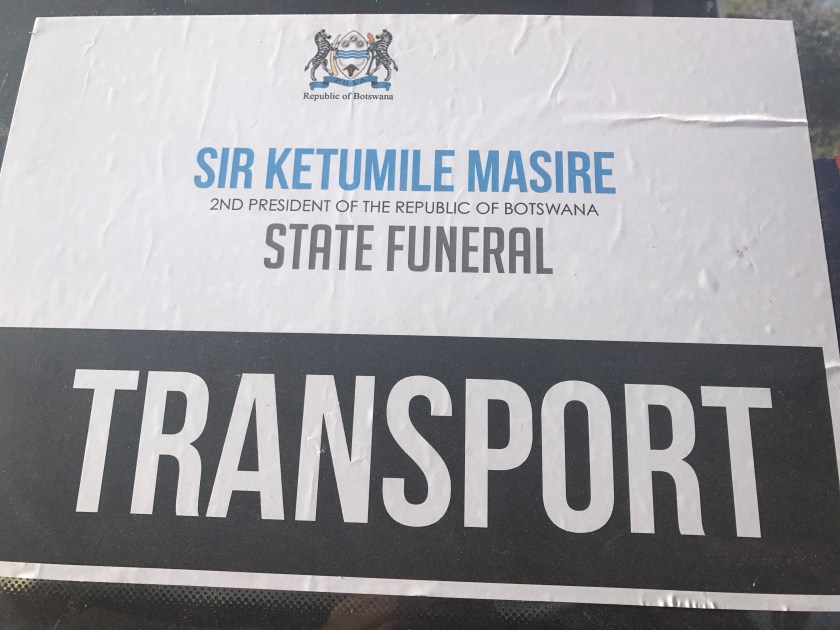
“We should not mourn but we should celebrate Masire’s life’’, wearing a hide cape, the celebrated poet Rre Dipako Sisienyana reminded us at the State Funeral of Sir Ketumile Masire, former president of Botswana, in Kanye, my home village.
Moving from side to side, he threw both of his hands in the air and between his pauses, rhythmic ululations expertly delivered by one elderly lady, matching the poet; she had a hat and a shawl over her shoulders. In front of the duo, laid a dark brown coffin, draped in a square blue, black and white cloth.
“E ka bo e se wena Ketumile
Barutegi ba ba tletseng ha ba
Ba ka bo ba aperwe ke sedi le lentsho
Ba ka bo ba aperwe ke lehihi
Lehihi le lentsho la go tlhoka thuto’’
Literally: If it wasn’t for you Ketumile, the educated people here would be in the dark.
Partly inspired by the fact that when I was a pupil at Mafhikana Primary School we were, strictly, always ordered to dot down anything in regards to the memorable day, if not one of the memorable day’s events in our lives, in both the Setswana and English lessons. As we were always restricted of what we could write about, I particularly found great joy in writing freely about whatever I liked in those dipolelo, or compositions.
’’Nkgosi, e chaile! Ga ke batle go tlhaelwa ke setilo rra!’’ (Wake up; I don’t want to end up with having nowhere to sit!).
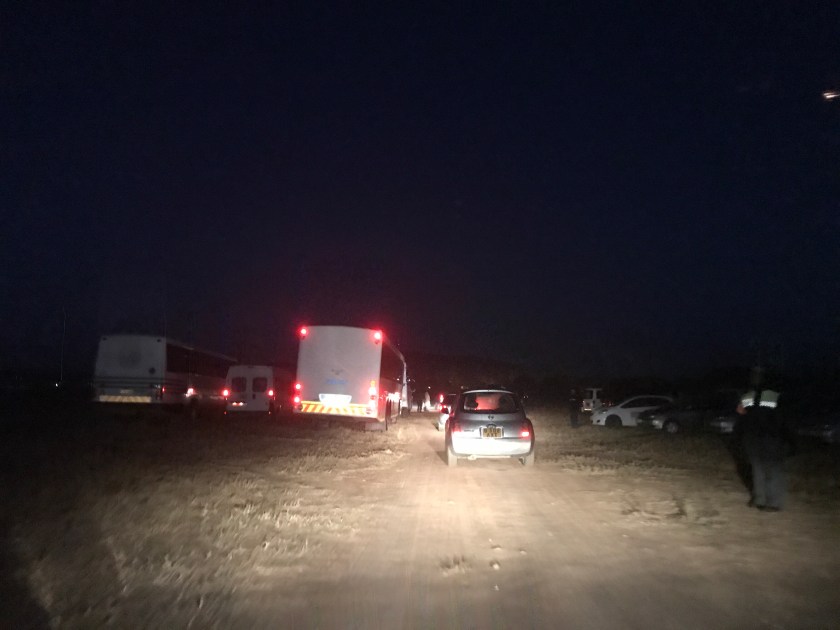
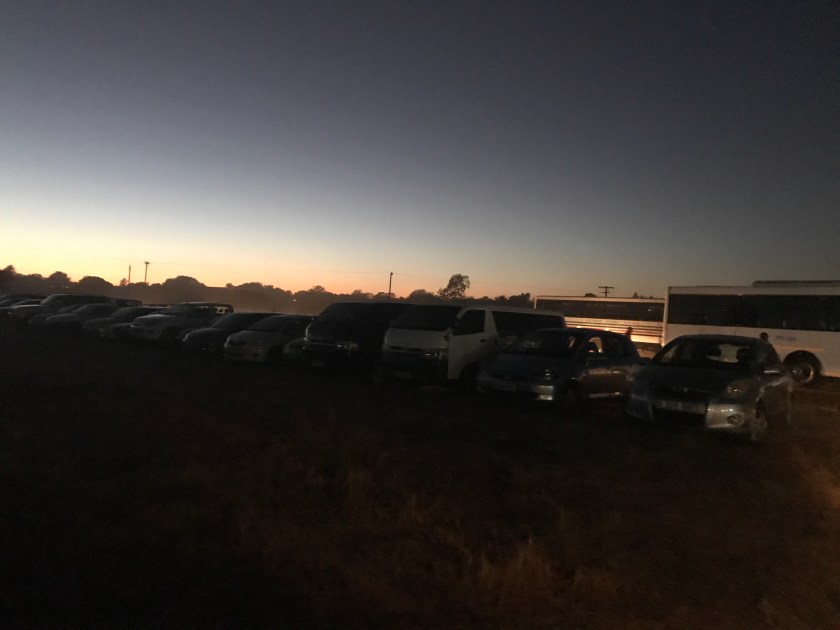
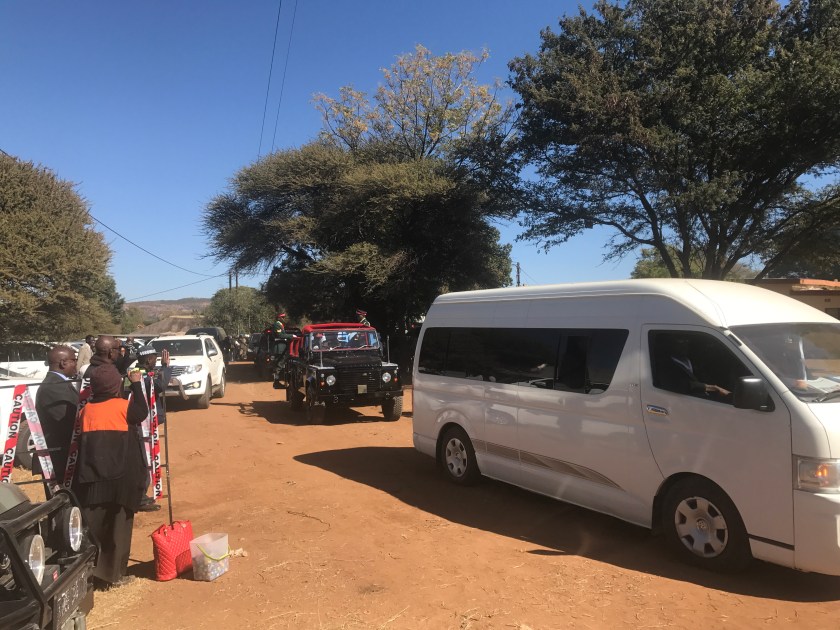
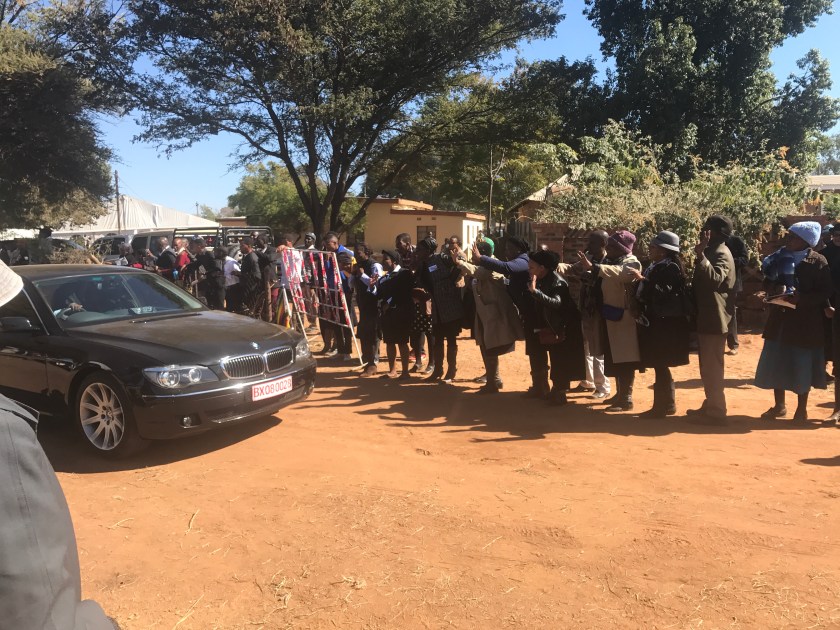
Shouted mama as she stood by my bedside at about 4:30 am. As I slowly opened one eye, I realised that she was already dressed up, in a beige winter coat. I rushed to the bathroom. About half an hour later I was wearing jeans, a pink shirt with only a black blazer on top. As soon as I stepped outside heading for the car I made a quick turn for my merino wool cape. We drove from home at about 5:10, and in the dark, we arrived at the car packed Ditshupo grounds at about 5:23. Where policewomen and men, wearing high-vis jackets, assisted the 63-year-old mama with parking. Following a number of attempts she finally managed to park the silver silver Toyota RAV4, Korea imported, while I was busy taking pictures through the window with my iPhone. As we stepped out of the warm car, holding mama’s hot lekatane-flavoured porridge, the police guided us into one of the white fleet of Botswana Police buses inside the grounds.
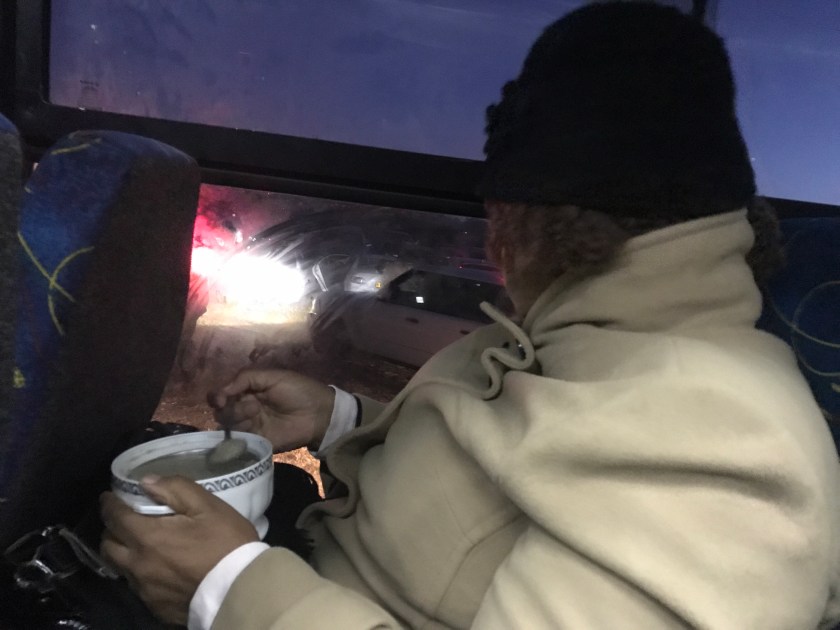
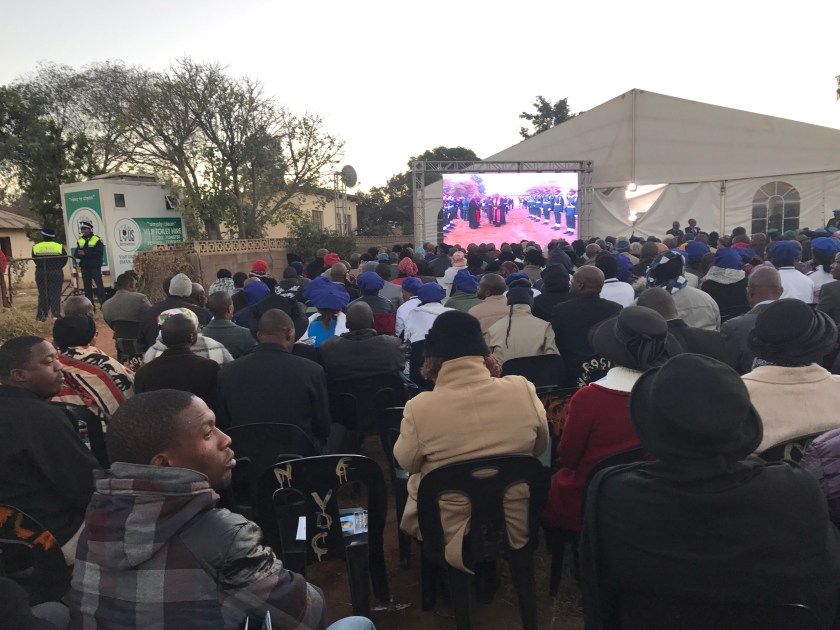
As soon as we settled down comfortably to the half-full not so warm bus my mother asked for her porridge. In the spine chilling Kanye cold we arrived just when she was finishing up her ritual breakfast, at Goo Motebejana Ward. We were led outside by yet more police and as well as soldiers, to the black plastic chairs just outside the elegant long white tent, on the side.
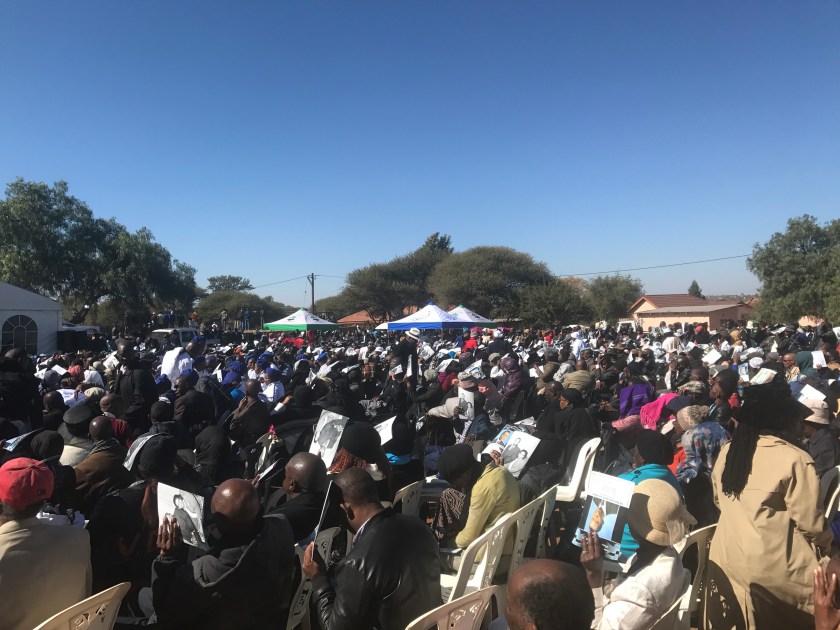
We sat down among fellow mourners who were glued onto the projection screening the funeral, as dignitaries’, including presidents and former presidents from the region and dikgosi, or traditional leaders, among others, made their way inside the tent. As soon as we sat down, my mother reminded me that we did not switch on the TV for her mother, my grandmother. Similar to President Masire, my grandmother was born in 1925. She quickly keyed onto her phone and talked to her younger sister, Mmenyane, who was just arriving in Kanye from Gaborone with her husband Kaizer. Mmenyane, in her early 50s, had told me that when she was a little girl, at Sethulo, they used to look forward to opening the gate for Masire’s car. The couple rushed home where they turned on the TV for Masire’s age mate.
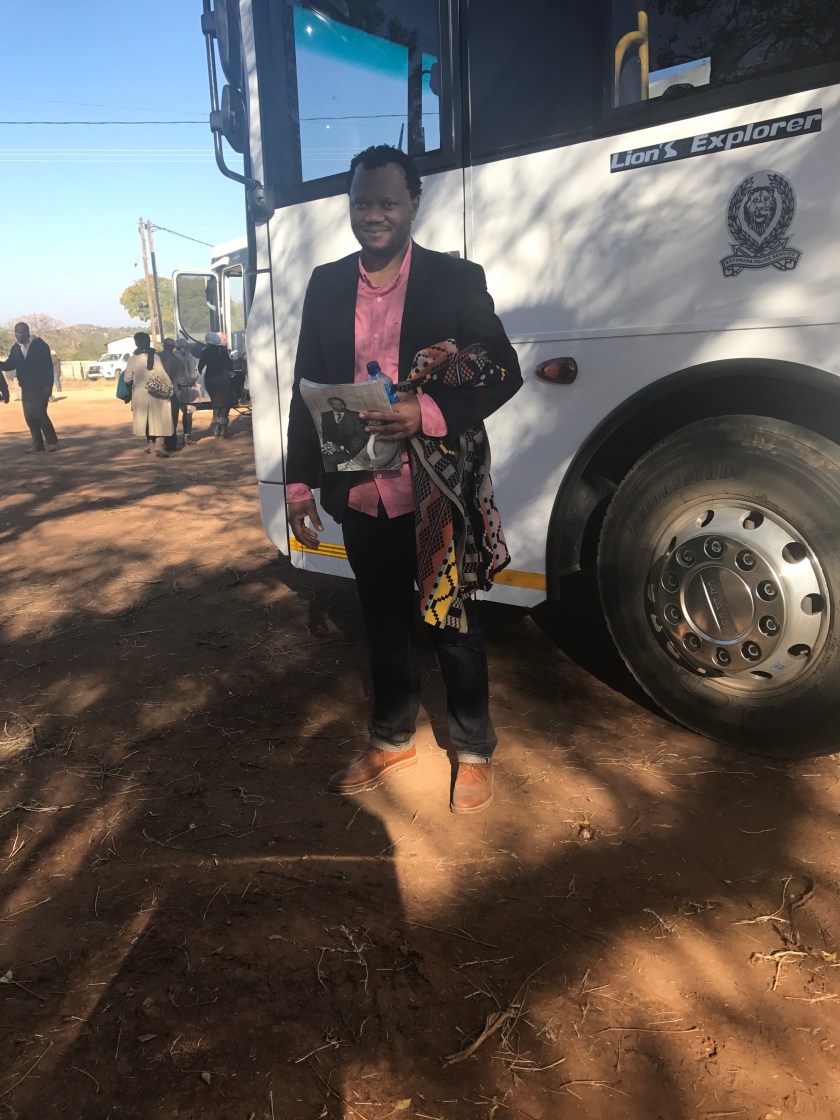
About 15 minutes later, we realised that Willy, mama’s tall brother, a Radiographer at Bokamoso Private Hospital, where the president died, was sitting right in front of us. He had kept his cool the whole time as his nephew and elder sister were discussing how to turn on the TV for his mother. Rano, his younger brother who loves photography, was also in attendance and he took me a couple of pictures, my favourite is the one in front of the white police bus following the funeral.
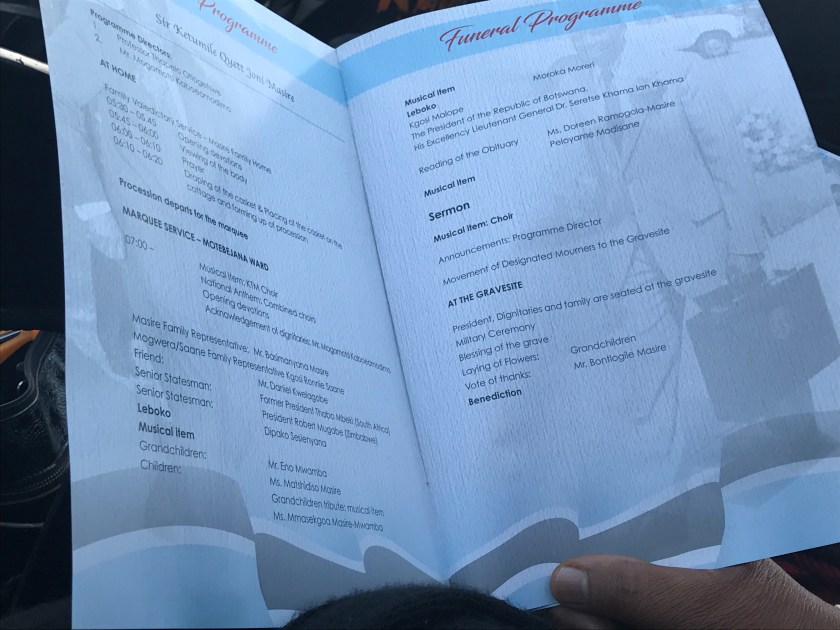
Perhaps the first speaker, an old man with a stick, wearing a black trench-coat, Rre Basimanyana Masire, the younger brother to the deceased, set the tone for the funeral particularly when he appeared to struggle for a word (he was addressing the mourners in English) and he joked: “Dibotelo nthusa ka lehoko hoo” (Dibotelo help me out here with the word), to the country well known Chief Justice Maruping M. Dibotelo. To which evoked a rapturous laughter from the mourners. For those who knew the deceased it was clear that him and Basimanyana had shared the same breast.
What also impressed me was that, one of the programme directors, Rre Mogomotsi Kaboyamodimo, swiftly apologised for not recognising the former First Lady Mme Mogae, the former South Africa First Lady Mme Mbeki, and the wife to His Honour Vice President Mme Masisi, when he earlier on acknowledged the dignitaries in attendance.
As the mumbling crowd, draped up in blankets, coats and shawls looked up at the drone camera that constantly manouvered above our heads, ushers distributed bottles of still water to everyone. There were also women, mostly, selling sweets, Nik-Naks, and peanuts to the united mourners.
Following on the eloquent legendary Rre Daniel Kwelagobe, whose name was among the Botswana Cabinet Ministers we recited in class at primary. Kwelagobe asserted that we could indeed see that funerals are not the same, he added:
“go na le phitlho ya mogaka, e e leng gore e ka re tsaya malatsi re ntse re bua ka ene, go na le phitlho ya matlhogojane…’’
In short, there is a funeral of a legend, that we could talk about for days and there is a funeral of an ordinary person.
Following on the Setswana tradition, setting the scene for Kgosi Malope II of the Bangwaketse, whose eulogy was in Setswana, and he similarly welcoming the incumbent president Dr. Lt General Seretse Khama, was yet another poet, Rre Moroka Moreri. Dressed similarly to Dipako, Moroka also had what looked like a leopard hide headgear, which extended to his shoulders; hanging from his wrist was a flywhisk made from horsetail that he swung and pointed towards President Khama towards the end of his poem. The poet, moving his broad shoulders up and down, with a teasing broad smile he continued the celebratory mood at the packed funeral:
“Thapelo a nko o ntlogele
O mme koo ke bale ke tshwana le Bishopo
Bishopo ga nke a emisiwa a bala Thapelo”
Translating into, let me finish up my poem please Thapelo, you know a Bishop’s reading is never interfered. In the poem, the skilful poet was referring to Professor Thapelo Otlogetswe, the other programme director, who introduced him to the podium. Thapelo, a Setswana custodian, is an Oxford trained professor of linguistics and lexicography at the University of Botswana. More importantly, on Tuesday 8 December 2015, he had an exclusive private dinner with former president Masire at Beef Baron, Grand Palm Hotel, in Gaborone: they talked ’’about farming, language, politics, writing and the development and preservation of the Setswana language and culture’’ (otlogetswe.com).
“Tsaya seo sa ga go Thapelo
ke a tsamaya monngame
ke tsamaya ke itumela
Ka re a rotlhe re itumeleleng
Ga re a tla hano go tla go lela’’
Now you can take away your microphone Thapelo, I am leaving sir, I am leaving full of joy, let us all rejoice for we are not here to mourn, concluded the prominent Moroka, to the clapping, whistles and ululations by the elated mourners, including mama.


