Under the scotching sun, the short and well-built driver stepped on the gas of the Mercedes Benz Sprinter out of the Gaborone Bus Rank on a Sunday afternoon at exactly 12:03. He left a greyish cloud from exhaust fumes behind, to the murmuring and whistles by most hawkers, mostly seated on white plastic chairs under brightly coloured shades.
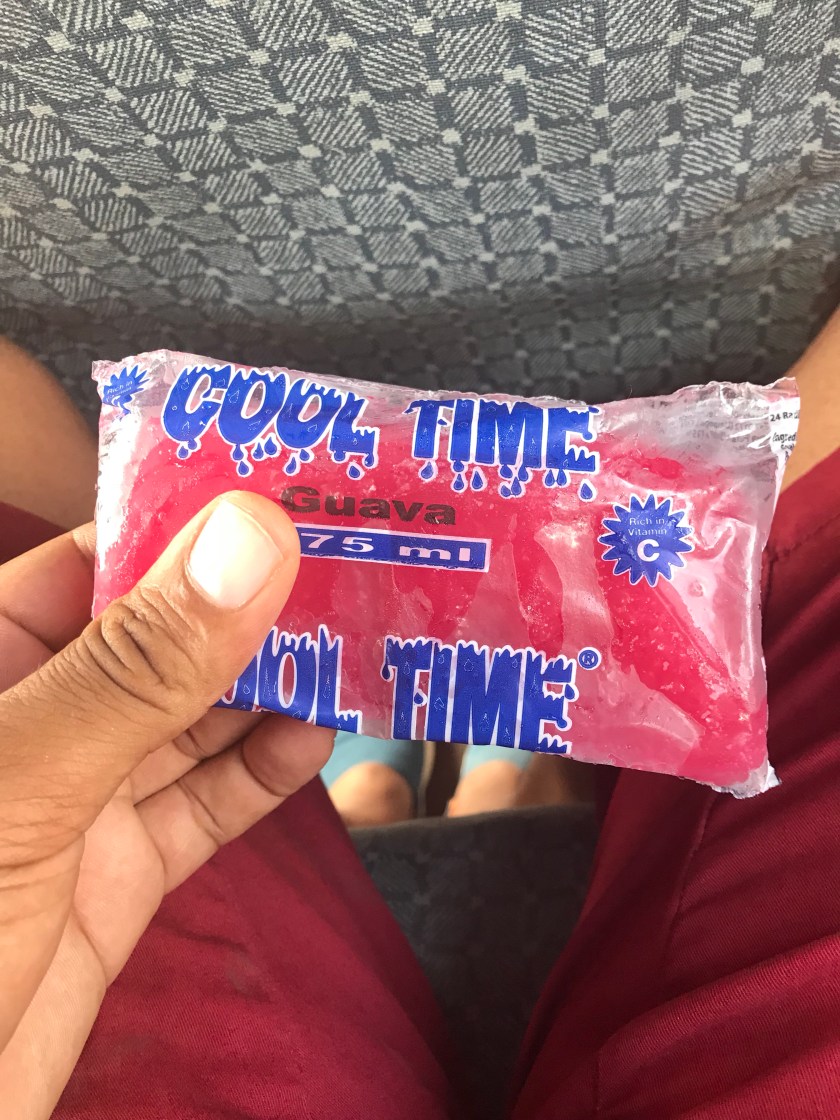
Leaving the cloud of smoke behind, I was busy enjoying a frozen Guava Cooltime that I had bought for 3.00 Pula from the engaging, and eloquent hawker selling “chicken pies, russian pies and cool time”. I particularly enjoyed the tempting aroma of the chicken and russian pies.
We passed Game City Shopping Complex on the main Lobatse Road and went past the famous Kgale Hill, just when I was sucking the last juices of the popular “temperature control” quencher, as praised by the tempting hawker. It was at Kgale Hill that I was reminded of the baboons that almost snached my tasty Madombi le Nama (dumplings and beef) a few weeks ago from one of the stalls overloking the Game City Taxi Rank.
On my right we passed Metsimaswaana, judging by the signpost, a river. We then passed a white and blue signpost saying “Welcome to Eden City”, a stone throw away from the singnage was a white and blue police van, just under a tree. At 12:29, we passed another signpost, perhaps, Botswana’s Disney Land, Lions Park Resort, and it was there that I was spoilt to a herd of cattle with heads down, amid lush grasslands of trees, with one or two frisking their tails.
Just after Lions Park, still on the Lobatse Road, I saw yet another signpost that read: “Crocodile Pools”, next was a flock of goats meandering through more trees and scrubs. I particularly enjoyed the melodious bell sounds emanating from around the neck of one black goat with horns.
Closer to the livestock were about 6-7 men, most in blue overalls with shiny green reflectors, one had orange overalls, some were holding some shiny long thin metals, but not pipes. The other man was seated, had something that could be likened to what one of the 2 gentlemen in navy pants and bright green jackets and white caps was looking through ealier just by the white and blue parked van. Heaps of soils sorrounded them, on the right side of the road were bags of cement that appeared to have been lined up strategically on the to be paved road, I reasoned. Further ahead were yellow monster vehicles, I think 3.
“Police 11 vs Centre Chiefs? Today? What time?” Asked the Sprinter Conductor.
“Ee, gompieno, ka 3” replied the driver.
“That is a big game, a proper football match.” Concluded the Conductor.
At about 12:49, we made a right turn at the Mogobane signpost. Driving through the picturesque village; on my right I saw yet another heard of cattle, just behind the grazing animals was an elderly man on foot, lifting up a black bicycle over a small heap of termite moulds.
As the white Sprinter, with blue plate numbers, stopped for one gentleman. On my right I saw a military green tent in one homestead and next to the tent, under shades of trees the yard was crowded with people, some in suits, others in different bright dresses, red, yellow, pink, etc. From the road, I could not see exactly what they were doing, but judging from the quite looking atmosphere that is unusual to Botswana weddings, I concluded that they had earlier buried their loved one. As I reflected on my own mortality, pleasing to the eye were the magnificent hills of the village, beyond the tent and other home yards, mostly with corrugated iron roofing.
While I was still admiring the lush green hills, my heart almost stopped as the stunning, almost overflowing Mogobane Dam peacefully greeted me. Just when I waved back, perhaps twice, one for the dam and two for the green hills providing a picturesque backdrop to the flowing water, the Sprinter driver, wearing a navy t-shirt, stepped on the gas. On the other side of the road, a few cattle await to cross the road to join a score of others by the edge of the dam for their, perhaps, ritual temperature control session: to quench their thirst and cool off.
On my left I could see a large number of people standing uder shades of trees, about 4 or 5 cars parked nearby. A number of well kitted young men were chasing a ball on foot in the grassless pitch. Nearby, yet again, a heard of cattle was grazing.
“Dumelang batsadi” said the the gentleman as soon as he sat down, just in front of me.
Approaching Ntlhantlhe village, according to the signpost, I saw two women strolling on a footpath through a bush; with one under a bright red umbrella to shield herself from the strong sun rays. I was reminded of my sister’s black umbrella. I saw an elderly lady, bending over some washing, the line almost full of sparkling white mini-towels. Grinning children running around barefooted in a cloud of dust just outside the sparkling mini-towels yard. The driver had to make a sudden stop as a couple of calves decided to ignore their mother’s orders, who were enjoying the Botswana grass just by the edge of the tarred road.
“O e tshware mo stopong” (wait for me at the next stop please), screamed the lady behind me, just when we approached a green and white signpost indicating that to the right was Lekgolobotlo. She had a brownish headscarf known as tukwi, identical to my mother’s, and was wearing a grey jacket and on her lapel was a small star that was inscribed with the letters Z.C.C and swatches of green and black cloth underneath the five-point silver star. I was reminded of my father’s cousin’s exact badge from the very same village of Ntlhantlhe. As the bus made a brief stop I opened the window and I was spoilt to the sweet melody of chirping birds, and from a distance I could hear a dog barking. In the nearby yard a red Massey Ferguson tractor, and not far from it I saw cups and plates upside down atop a pile of bricks.
As soon as we dropped the ZCC lady and the smartly dressed elderly gentleman, we passed green fields of what appeared to be foot high of Maize, perhaps Sorghum, drought-resistant historical staples in Botswana. We continued the journey and under a tree a family of donkeys were resting. Just after the hand written Boiteko CJSS signboard, we turned into Ranaka. At the stop, on the right I saw the peach painted tiny house with bold letters: Mme Nkokodi’s Tuckshop. I saw birds feeding from a silver dish that appeared to belong to a brownish dog layzing just by the tuckshop. We overtook a quartet of donkeys pulling a cart driven by a young boy of about 15, next to him was another of perhaps the same age. The two were laughing with great joy under the clear blue skies.
Immediately after the tuckshop and the two boys and four donkeys, in one spacious home yard, was a gentleman who was cutting hair of one seated gentleman, next to the them was a blue empty crate of the popular cartons of Chibuku, and a potable radio atop. I gazed around and could see that, perhaps, similar to my home village of Kanye, and even most parts of Gaborone, most dijarata, or home yards, had an outdoor pit-latrine toilets, a few not painted, some not even plastered. And next to one toilet was a wheelbarrow and a zinc bath tub facing down, and both the wheelbarrow and bath tub colours matched that of most toilets.
And at another stop, 2 elderly women’s journey ended. None of the people murmuring at the bus stop got on board the approximately 25-seater mini-bus. As we made a right turn out of Ranaka village to the final destination, there were 6 people left inside the bus: including the short driver and the talkative conductor who was wearing a pair of black jeans, and a long sleeved grey t-shirt, he had a pile of Pula notes in his right hand. We continued the journey for about 3 minutes before making a right turn and immediately after the turn, on my left, I saw a red, white and black cattle signpost.
We then proceeded with the journey up to a circle or roundabout, that had the well known, the well received and the countywide celebrated Botswana 50 blue, black and white mounted sign. Just before the circle was a clearly visible white letters of, A10 Jwaneng Windhoek, on a green signpost.
For a second I was reminded of Botswana’s gem-quality diamonds. I was reminded of the nearby Jwaneng Diamond Mine. And some of my uncles who had worked there. I was also reminded of my cousins who currently work there. I was reminded of the 2013 inspirational relocation of De Beers sales function from upmarket London to dusty Gaborone. Of course, I remembered that I was long told that Windhoek was German. Yes, I was reminded of the Herero women with their bright Victorian style dresses and huge hats as well as the Nama people of Namibia that the German immigrants terrorised in their own land. Of course, I was also reminded of the great Nama people of Lokgwabe and how they actually ended up in Botswana. I was reminded of the plunder of colonialism and imperialism and how it have shaped and continues to shape society. And I half-smiled when I was reminded of the 30-minute not so polite private interrogation I faced at the Frankfurt International Airport sometime in 2012 when I was in transit to Prague, Czech Republic. I wondered what exactly am I doing to “empower” my unborn child? Perhaps simply documenting this soothing journey of tranquil beauty is one of the limitless ways. This is for you daughter!
After the BOT50 circle I saw a group of young people who appeared to be changing one of the wheels of the 2 cars parked just off the road. One of the white cars appeared to be a Mercedes Benz.
At 13:33, we made a right turn into my natal village of Kanye: the final destination.
At about 13:38, the driver switched off the ignition at the Kanye Bus Rank, located just in front of Mongala Mall.
“We are leaving at 14:45” said the grinning Driver, and just after looking at his watch, the yawning Conductor continued recounting a bundle of notes he was holding.
The total cost of the journey was 24 Pula. P21 for the bus fare, P3 for the “temperature control” deep-pink Cool Time.


