Traditional mokolwane palm basket weaving is one of the integral aspects of Southern African cultures. Many commentators believe that the history of the Bantu, who originated from the Central African region is that of basket weaving (Yoffe 1978, in Lenao, Mbaiwa and Chanda 2015).
Although they are still made throughout Botswana, they are now primarily made in the north western Okavango Delta region by Hambukushu and Wayeyi women weavers living in the Etsha villages. It is worth noting that the Hambukushu of Botswana originate in Angola and sought refuge in Botswana in 1968 as they were persecuted by the Portuguese in Angola (Parsons 2008). Indeed, they brought with them the most prominent patterns that have been fused together with the local patterns to create the emblematic souvenir of Botswana, tlatlana, or weaved basket. (I have since learned that this was actually the second migration of the Hambukushu people. Many fled the Barotseland of Zambia to Ngamiland of Botswana in the early 19th century (Gibbins 1904 in Larson 1970).
The traditional use of the baskets is for grain storage and food storage; winnowing as well as for bartering system, that is for commercial purposes mainly in exchange for other products or produce. The most prominent contemporary uses are for commercial and decoration purposes. Following Mbaiwa (2004), baskets are a cultural tourism product that can raise income earning and alternative livelihood opportunities for rural residents.
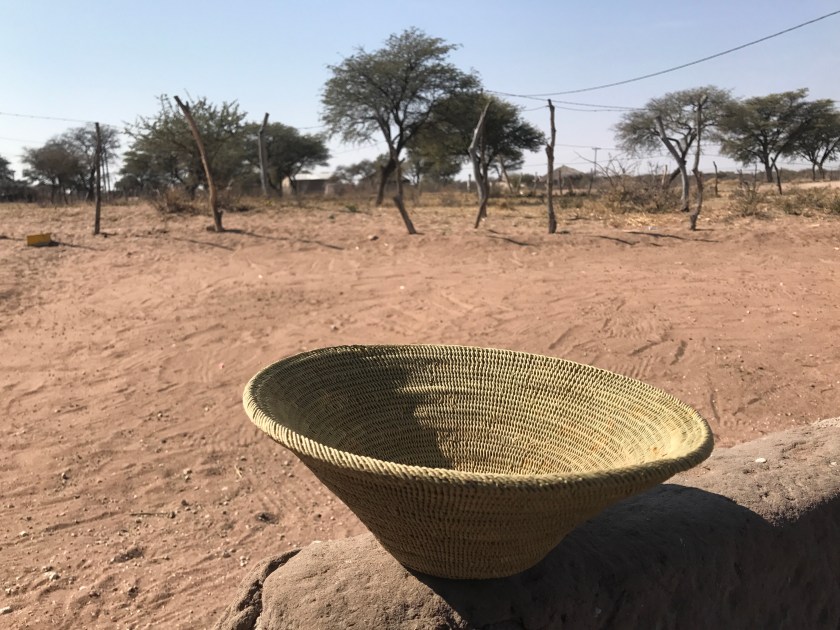
The plain masterpiece in this picture was bought for only 100 Pula from respondent 1, when I was on fieldwork (for my masters dissertation) in the village of Gasita in Southern Botswana. The elderly woman told me that weaving is commonly performed by women. And that unlike in the past, weaving is primarily for commercial purposes and decorations.
I also came to realise that from what she was passionately telling me, they have loads of baskets in stock and lack a coordinated process whereby they can actually sell them. Perhaps, what they need is an organised community trust that could source inspiration from the Ngwao Boswa of Gumare or the Weavers Group of Etsha 6. Of course, all of these societies are from the north western Okavango Delta region, where wildlife and scenery tourism is thriving.
#Basket
#Weaving
#iLoveBotswana
##iAmMotswana
#CommunityTrust
#BotswanaBaskets


