18.02.19
On a warm Tuesday of February 2019, following Rre Lux Ramotadima’s burial, the short and stocky Rre Magosi stood up and invited those who have worked ko mmaeneng or the South African Mines, their widows and/or dependents to attend a Kgotla meeting on the 8th of March Ko Kgosing, the Kanye Main Kgotla. What was interesting was that he stood up again to emphasise that the male children of the ex-miners, in particular, should be in attendance.
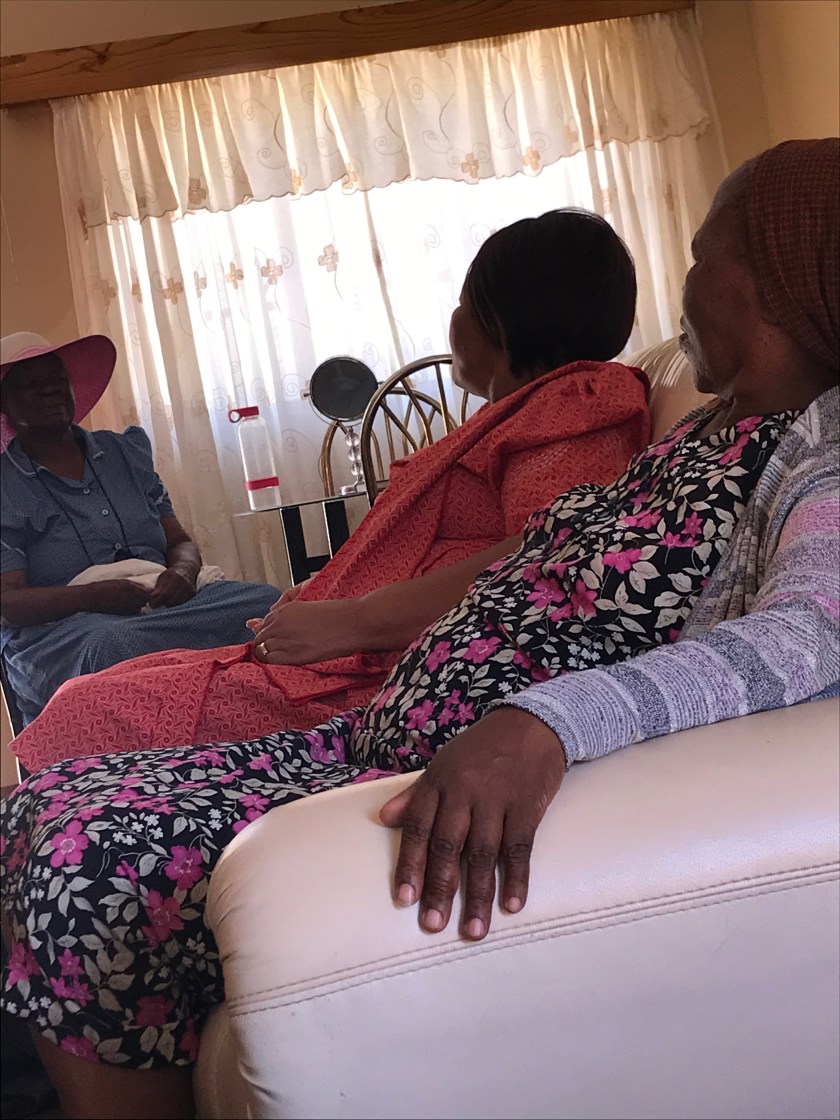
Today, just after midday, my rakgadi, Sylvia, walked in our home from the Mafhikana Clinic. Just after settling on the cream couch she said: “Nne ke batla go bolelela Mmaagwe Molly ka NRC” (I wanted to tell your mother about NRC).
About 15 minutes later, with great interest, I was listening as my 74 year old aunt, the sister to my late father, Sylvia, my 65 year old mother, Florence, as well as my 94 year old grandmother, Ontefetse, spoke passionately about the Kgotla meeting Rre Magosi invited them to.
Not only Sylvia’s elder brother and uncles worked at the mines but her late husband too, Phiri Ramantele; Gaontebale’s husband, Lekgoanyana Kgasa, my late father, worked at the South African mines; my late uncle, Mogotsakgotla Babusi, Ontefetse’s son, worked at the South African mines. It should be noted that Rre Magosi himself is an ex-miner and a former trade unionist and is one of the leading figures in Botswana at the grassroots struggles on ex-miners compensation.
The recruitment of mineworkers in neighbouring countries, such as Botswana, was facilitated through recruitment organisations. The most notable of such organisations is the Witwatersrand Labour Organisation (WNLA) and the Native Recruiting Corporation (NRC). The WNLA and NRC were amalgamated in 1977 to form The Employment Bureau of Africa (TEBA) (Mpedi and Nyenti 2013). I am reminded of countless stories about NRC offices in Kanye, where my father had to report every time he travelled to the Durban Deep Mine in Roodepoort, South Africa, where he worked for more than 20 years. His Scope Team Leader Mine Certificate has the letters TEBA on the bottom.
The trio spent about 30 minutes going on and on about the monies the ex-gold miners left this earth waiting on. While they have been called before Ko Kgosing, as well as other locations, in vain, they indicated that they were eagerly waiting for the 8th of March. And that even though it was not stated, they are going to bring with them bo Makholoskop, the ID cards used by their husbands (and son) at the South African Gold Mines.
What I particularly liked from the visibly frustrated trio is that they know very well that there is a likelihood that cash transfers they are owed is not released in their lifetime. Having said that, they know very well that at some point, no matter what, the money will be given to “them”. It could be in their children’s, grandchildren, or even great grandchildren’s lifetime. Indeed, some of the ex-miners have received compensation, notably those who contracted deadly occupational lung diseases.
“Nnyaa akere bontsi jwa masole bo ile fela nntse ba re madi a rona a etla. Ke a gompieno a jewa ke dikokomane tsa bone.” Alluded my grandmother, Ontefetse.
She made this reference to most of the World War veterans who passed waiting for their deserved compensation, but it is comforting that their descendants are the beneficiaries of the monthly allowance.
In their study, “Challenges Experienced By Former Mineworkers in Accessing Social Security Benefits in Selected Southern African Countries”, Mpedi and Nyenti (2013), found that the failure by the various South African mining companies to give social security benefits to former migrant mineworkers and/or their dependents has adverse economic, social and health consequences on large number of persons and communities.
What is clear here is that a rights-based approach should be adopted by the gold mining companies, the South African government as well as the nearby labour-sending countries’ governments, the Botswana government in this case, to actively promote the rights of former mineworkers, their widows and wives to equally assert their rights to compensation and other elusive social protection funds (Kistnasamy et al. 2018). Following on Wilson (2005), the rights-based approach to development promote equality, freedom, and tackles the power issues that lie at the root of poverty and cunning tendencies.
While we have benefited from South Africa, it’s important to also acknowledge the marginalization we were subjected to from the country, Apartheid South Africa in particular. Perhaps, the meeting by the three elderly women illustrate some of the remnants of colonialism, apartheid and capitalism in the daily lives of communities in Southern Africa.
For some of us, it is these countless face-to-face stories told by our aunties, our grandmothers, and our mothers that have raised us, that have shaped our worldview and that continue to inspire us. These sentiments were echoed by my very talkative cousin Shima, Sylvia’s son, when we dropped off her mother at her home later in the day. After I assured him that I was going to be Ko Kgosing on the 8th of March:
“Tsamaya fela o e go ba tsaa dinepe. Ebile o kwale le se dibui di se buang. Eee! O kwale gore ka ngwaga wa go re, ka nako ya go re, sebui se se ne sa bua se nna nne. Eee!”
(Go on and take them pictures. Write down everything that is said. Quote the speakers and write down the time and year. Yes!)

 Blessing Kgosi e tsile Kgasa