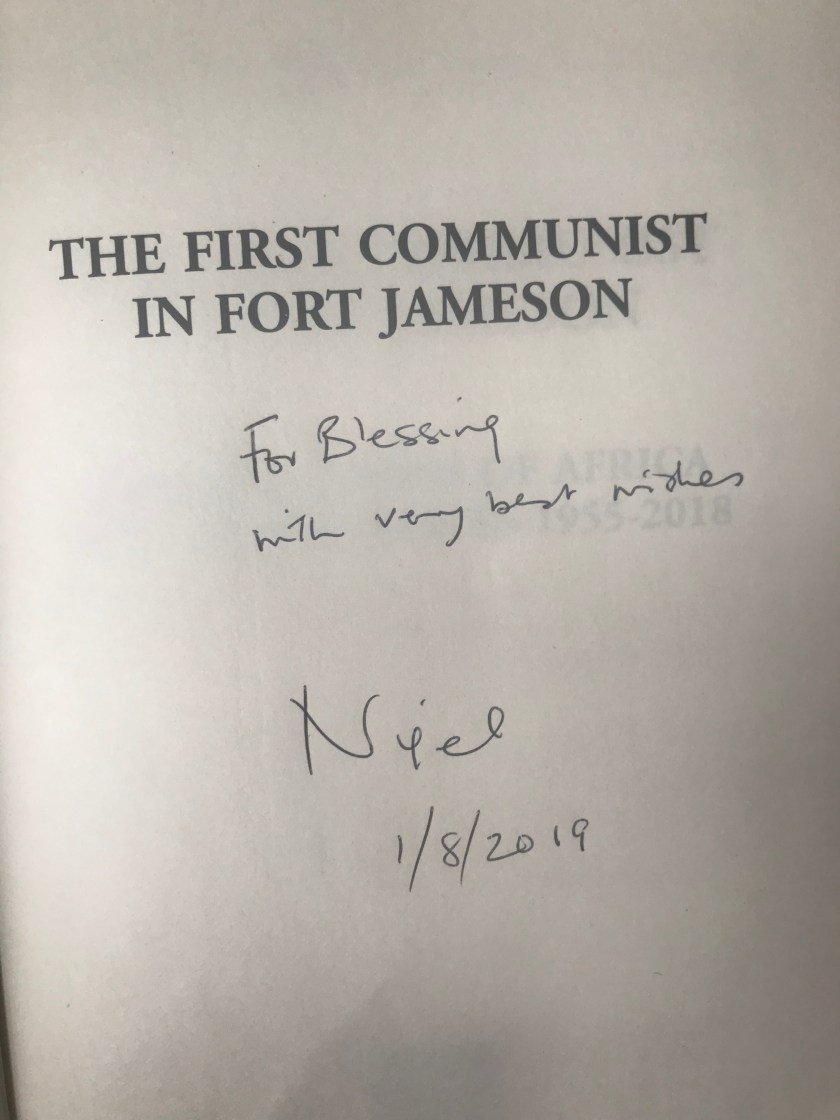
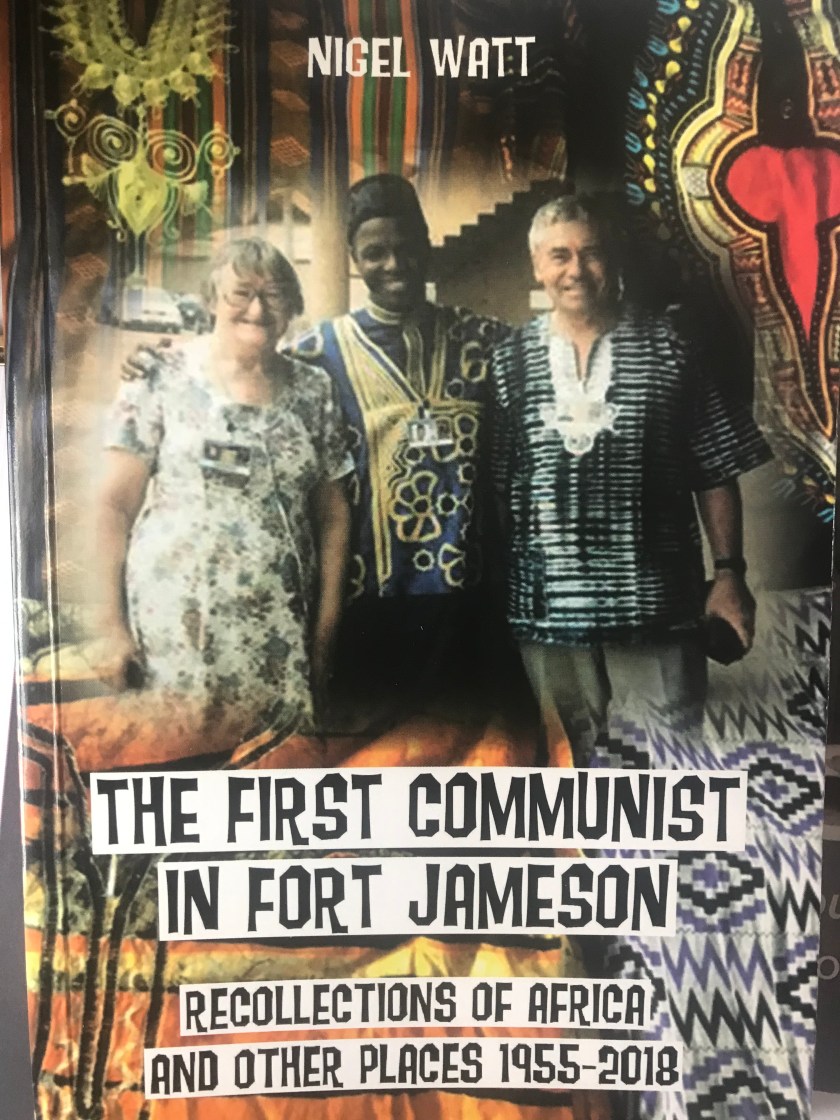
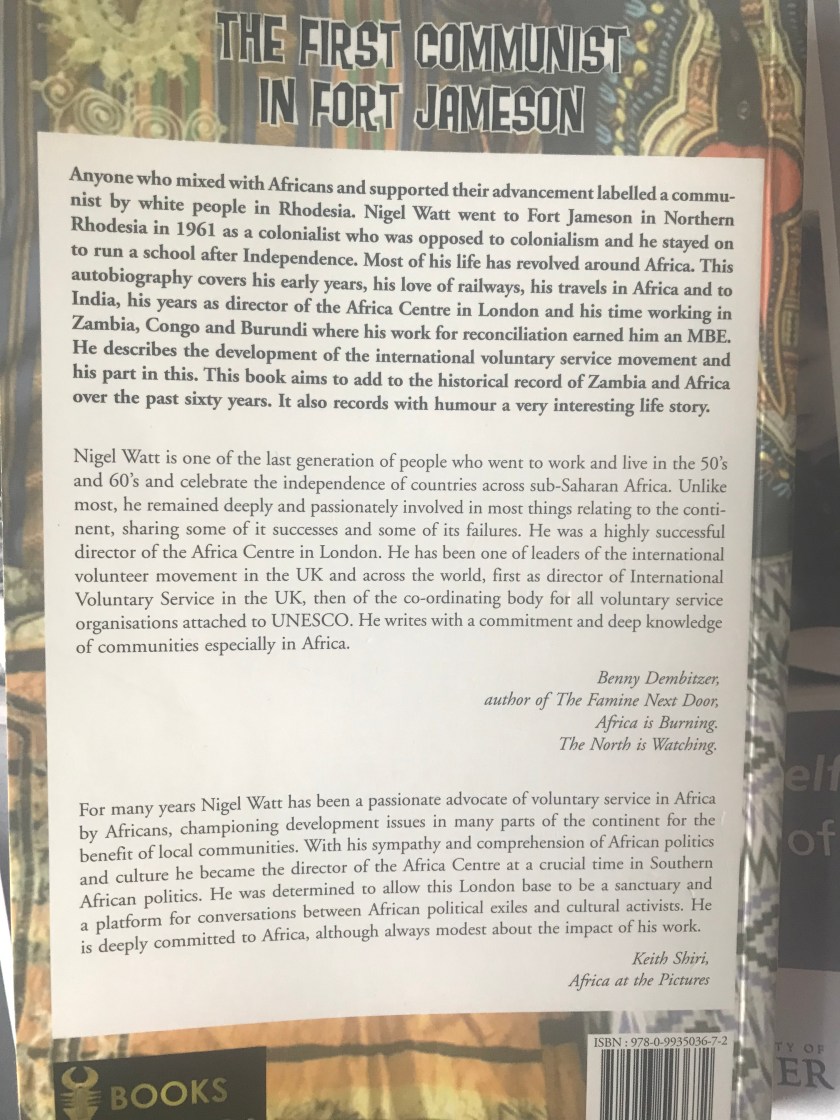
Nigel is 83 years old. In his book, “The First Communist in Fort Jameson”, he writes: “Independent Botswana was an easy place for foreign NGOs, too easy perhaps. The small population and lack of well-educated personnel meant that expatriates of all kinds, including IVS volunteers, were badly needed and the administration was welcoming and efficient”. Fort Jameson (now Chipata), is a City in Zambia where Nigel was a teacher and headmaster.
He also writes fondly of the Dr Chiepe rain story he shared with me. And of the late Patrick van Rensburg, the anti apartheid activists and one of the “founders of modern #Botswana” who founded Swaneng Hill School and the popular Brigades found across the country. My mother is actually a graduate of the critical vocational schools.
While I knew of Dr Chiepe and van Rensburg, I did not know of Marius Schoon. “I cannot write about Botswana without recounting the story of Marius Schoon”, writes Nigel.
With great interest, I listened to Nigel’s recollection as he stated that Marius worked for IVS in Botswana and owing to his connection with ANC, he was under constant threats from the apartheid government and IVS moved him to Angola. Marius told him that even during the “Truth and Reconciliation Commission” hearing he could never forgive the apartheid assassin who bombed his wife and daughter to death in Lubango, Angola.
In his sitting room, I was struck by Nigel’s collage of photos on the wall illustrating his life story from 1936. The decor in his Edwardian house includes Burundian baskets and artwork from Nigeria.
But I was more fascinated by some abstract portraits which carried the signature Malangatana. Nigel stated that they were by one famous Mozambican artist. And that he made them for his children in 1987 when he stayed at his place when he had a show at the Africa Centre, where Nigel was director in 1984-1991.


