It was around 1992: we must have done them once, or twice – definitely not more than three times. Whenever we had plenty of the ever delicious beef, sometimes goats’ meat and occasionally lamb; my brother and I (our sister was at varsity) would help my parents marinate the carefully cut meat strips with a bit of salt and the red chili peppers, ”mpherehere’’ my mother called the hot spices – usually, home grown.
Maximum security guarded: the meat, placed on the white empty maize-meal sack, would be sun-dried on top of the neatly cut and tidy hedges – for the whole afternoon; under the ever watchful eye of my father. Who would be seated on a crispy-white plastic garden chair (my brother and I hated cleaning the sparkling chairs!) – Under the moretlwa tree shading. A big jar of the home brewed granadilla–flavored lemonade in front of him: ”motjatja!” He loved it.
Just before sunset, the not-so-dried strips would be transferred to the harabese house, where they would be hanged artistically on the emergency hanging rope lines – attached to the trusses of the thatched house; luckily, no one slept there – except for 1 or 2 rattex spoilt rats. This indoor hanging line played a major role during the various rainstorms I witnessed!
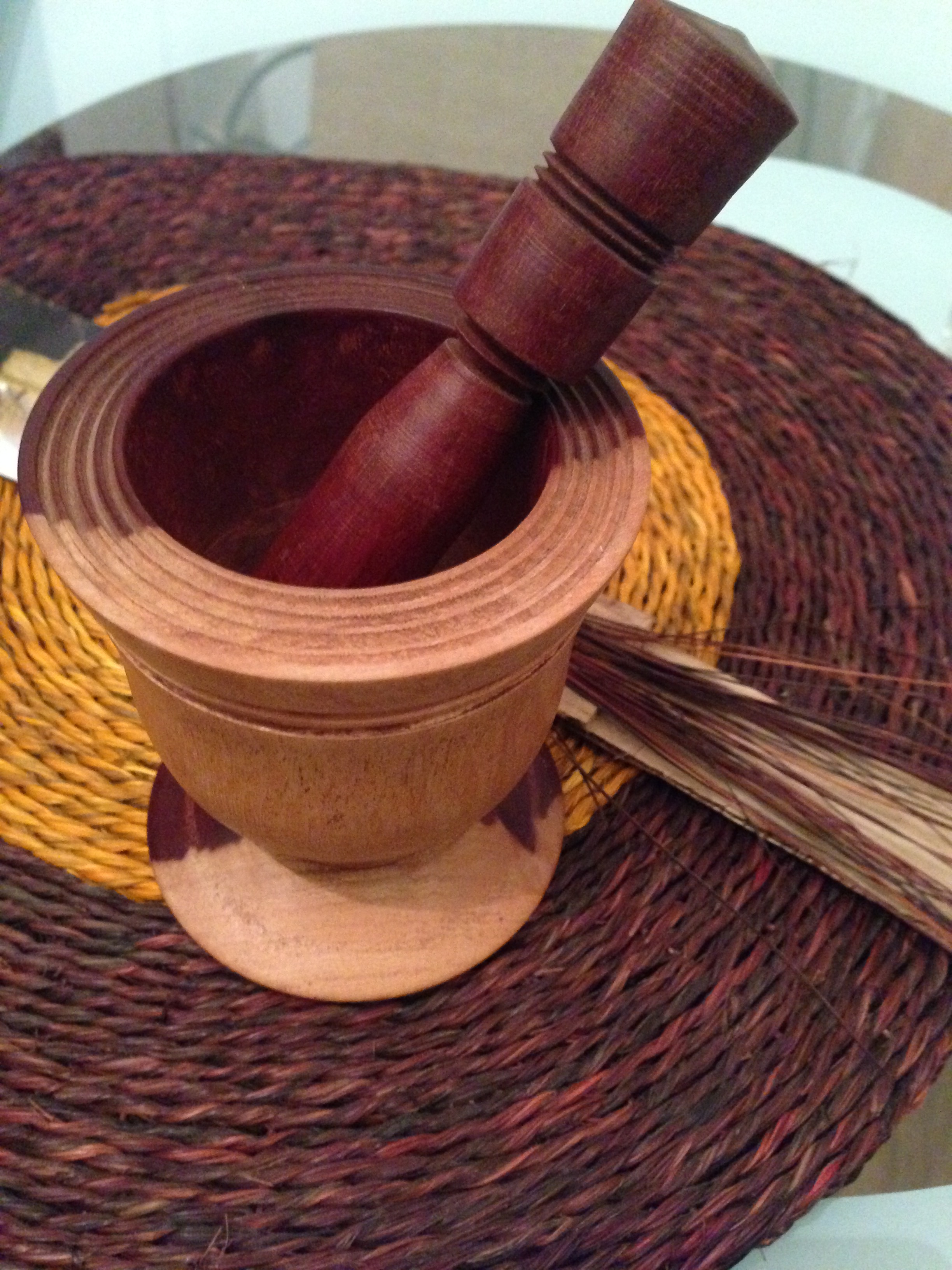
The sun drying operation would continue the following noon, and the one after! The mission would be repeated until the digwapa had completely dried. My brother and I would steal and chew them all the time. My mother preferred cooking them–AGAIN! Then, with our help; transferred the well cooked meat strips into a kika to excitedly pound them up with a motshe (this process we cherished) – to make the seswaa sa digwapa.
As much as I have travelled: I’m still to taste a better tasting beef. Maybe, the other meats didn’t sleep in the harabese?
Photo: My Kika and Motshe, from Mama.


