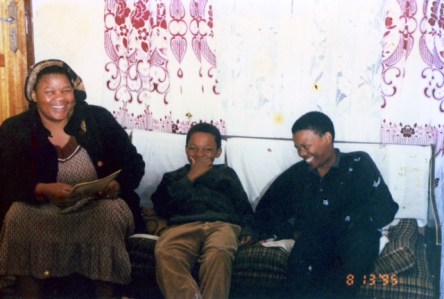
I believe the first time they stayed at home was around 1987. They usually came in pairs, sometimes solo. They would stay up for around a month, and this was for the next 9 years. I believe the last one was a moustached gentleman named Matt. I lived under the same roof with the makgoa from a very young age.
I believe my parents received a small amount of food from the Government, and the fashionable gas cylinder refill for cooking – to help with the makgoa hosting costs. The makgoa family hosting was done for the makgoa to integrate into the Botswana society, to live the Setswana way, with the Batswana. I am told my parents and other host families were encouraged to cook Setswana food. This was definitely to my disappointment as I thought that once they were with us, we would only eat the ”dijo tsa sekgoa” (food for white people).
From this free accommodation, my parents provided, most of my curiosities were answered about these ‘pale’ and longhaired people. I noticed that, they, like us: went to the pit latrine toilet, bathed, cooked and ate, liked beef, liked chicken, liked bread, knelt with us during praying time, talked and they laughed. However, I also noticed that they liked what we didn’t like: they took pictures a lot, they loved the moon and the stars, they crazily liked dogs, they liked wearing shorts a lot, they slept with windows open, and they used mosquito nets. Of course, there were a significant number of us who liked dogs: my mother, my brother, some of my classmates and various relatives I knew. But, it’s also worth pointing out that, it seemed to me that most of us who liked dogs, liked them for security reasons, or for hunting at the masimo and cattle post. Only now I know why we ‘did not like’ what they liked.
I am told one of the very first ones we hosted was a couple, well in their mid 60’s. I am told one of these makgoa was always praising me: ”the man who likes to eat and write!” I have read with interest that these makgoa, were volunteers; who, the Government of Botswana had initially asked the USA Government for around 50 volunteers for help, mainly in education, just after independence – in 1966. However, they were not only required in education; but also, some performed significant duties in clinics, hospitals, government offices, and non-governmental organisations. As a result, contributing immensely to the development of Botswana. More will follow during the next 3 decades, and the programme stopped in 1997 when Botswana was then classified as a middle-income country but to resume again in 2003, mainly because of the AIDS epidemic.
As much as my mother took us to the photo studios when we were children; as much as my favourite late uncle Bathina took lots and lots of our childhood pictures; I should publicly give thanks, to the USA Government, particularly to these makgoa we hosted, for the countless beautiful memories they left me with, they left us with – especially the photos.
It is fair to say: to the same extent these makgoa learned from us, through integration, we learned from them. These makgoa were the American Peace Corps Volunteers.
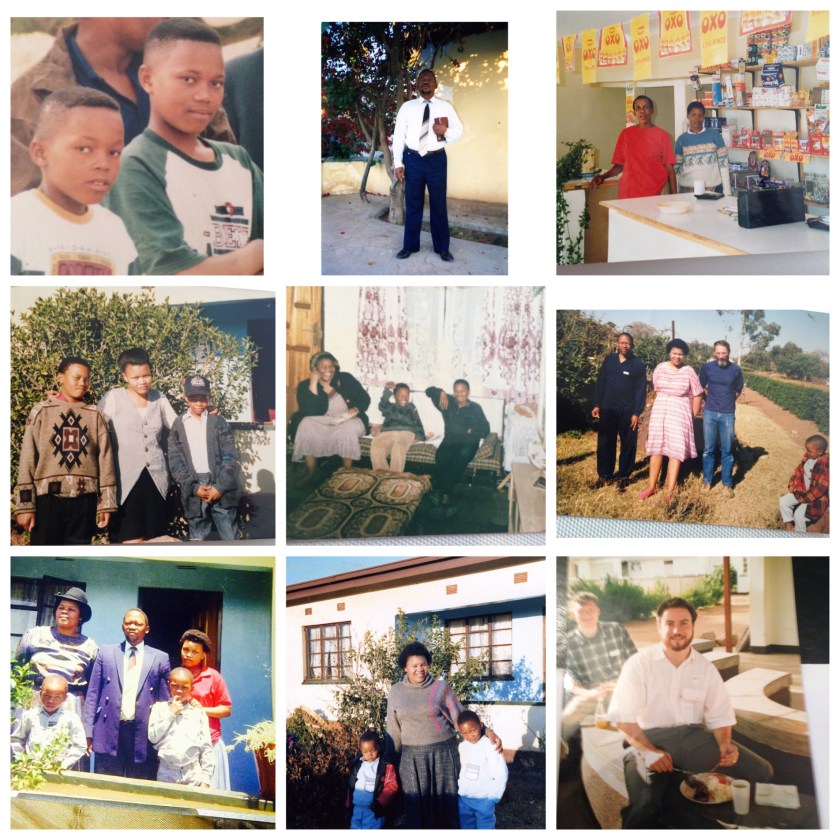 Photo Credit: USA Peace Corps Volunteers ( Makgoa)


