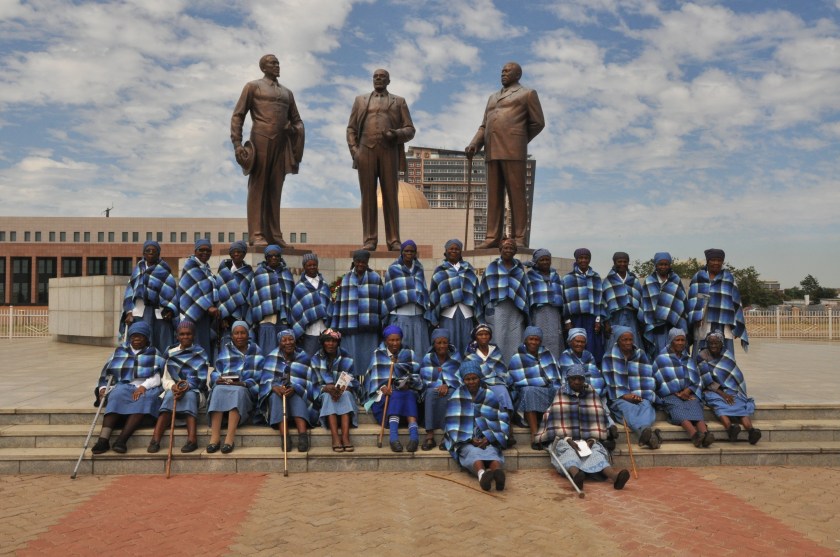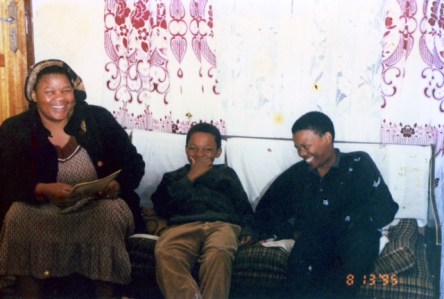
One of the best moments in my life was in May 2009, coincidently during the worst moment in my life. Yes. This was when I found myself around the ’’Basadi-bagolo’’(old women) rather, Bo-mmemogolo, Bo-nkuku, or my grandmothers. I feel honoured to confirm that about 6 of them are in this priceless photo. A very special shoutout to the Photographer. They were not aware that I was in the area since a beige wall separated us. I think the youngest amongst them, was around 80 years old.
They were loud, happily reminiscing about their younger days: painting the scenes with well-spoken words and repeatedly, laughing thunderously. My heartbroken mother, in the other room, the glass door wide open, perhaps, for the juicy stories to find the way to her.
I believe the Grannies, in the weird sofa less sitting room, lined up with mattresses, and some only blankets on the brownish carpet were not aware that I was in the other room. Maybe they didn’t care; from the other room, I overheard a lot of stories. But the one that stayed with me was when one Granny was still a young lady, back in the mid-1940’s, and she agreed to meet the young man chasing her heart, “ko nokeng” (by the communal water point). I knew her very well, however, her voice totally changed when she re-told the tale of the village lovers ’’ko nokeng’’.
As I left my bedroom, passing the lined up grandmothers, I shouted: ’’ ehe lo ne lo le ko nokeng!” (Ohh you were by the communal well): to a bursting laughter by the grandmothers and my mother, when I reappeared, some were still wiping off their teary eyes!
It was maybe just before 9pm; I believe about 2 days before we buried Papa. Hearing the juicy stories, the laughing as well as the ululations one would have presumed that the ”Basadi-bagolo” had gathered for a very big wedding.
7 years later: I was “very happy”, when my mother, herself a ”mosadi-mogolo”’ (grandmother), over the phone, confirmed, earlier this year, that she had just come back from a funeral. At the crowded funeral, addressing the mourners, she briefly spoke, about the deceased. Just like the Granny’s voice changed when she narrated the village lover’s story, my mother’s voice changed when she informed me, and I also know, that her voice was melodious at the well-attended funeral. Apparently, the crowd of mourners burst out into a roaring laughter at the “nokeng” Granny’s funeral upon hearing my mothers mimicking the Granny. One would have presumed that they were at a very big wedding. I wanted to remind my mother about the Granny’s ”nokeng” story: I didn’t, there was no need.
This is my forever-grateful way, of thanking my crowded dear grandmothers, at the funerals.
Ke a leboga bo-nkuku.