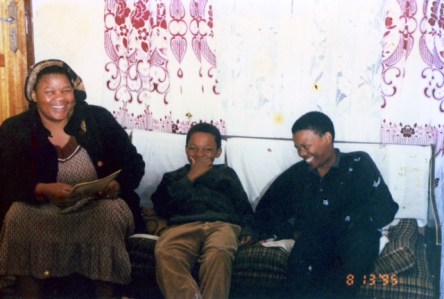
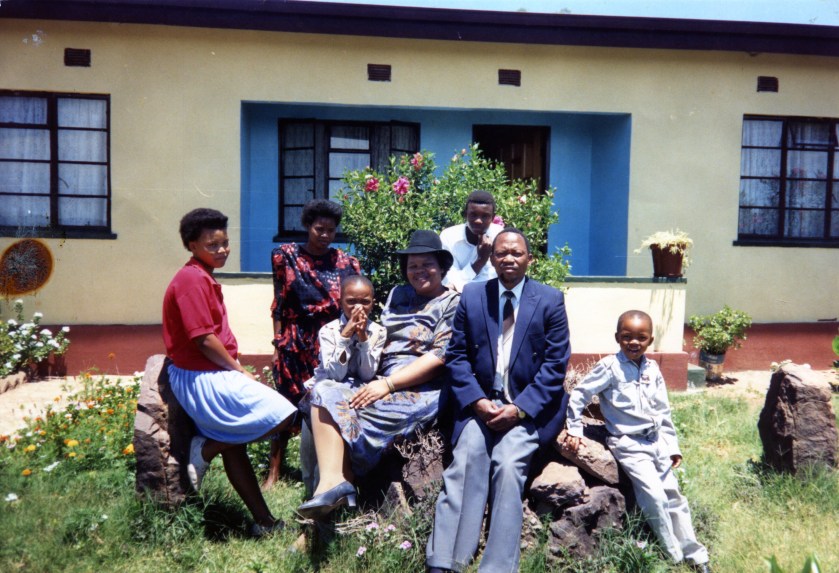
 From the church, again.
”Hurry up Blessing!”
Just after 9 a.m., in the fresh warm air Standard 5 classroom of a usually noisy group of about 30 boys and girls. The strict Madam ordered me to collect the portable Omega Radio from the feared and intimidating staff room, directly opposite the equally strict school Headmistress. Regardless of the weather, her Office door was always wide open. Luckily, she was busy on the white-corded phone when she swayed her hand at me – signalling I keep walking – when our eyes met as I finally approached the spine-chilling empty staff room. It was in 1992.
“Children, Botswana gained independence from Great Britain – on 30 September 1966. And the first president of The Republic of Botswana was Sir Seretse Khama; with Dr. Quett Ketumile Masire as the vice President!”
A smooth, clear, and uplifting female voice emanating from the Omega radio informed everyone in the classroom, the kind of voice that any listener would immediately trust its unknown owner. Nobody moved, except for the nodding Madam.
Seated, we were all listening attentively, and our small eyes glued to the greyish AM/FM stereo. Our Madam, forever holding the dreaded wooden stick, with her white chalk painted hands, was walking up and down the cobra-wax polished sparkling classroom – in between the rows of the clustered desks – detecting who was and who was not listening, as well as obediently TV-watching the Radio Botswana Weekly Education Programme. Rather than being disturbed by the giant blue world map poster, right at the back wall of the colourful classroom; or the Members of Botswana Cabinet picture; as well as the various animals, each one of the wild and domestic beasts individually handcrafted by the almost 30 students.
At the end of the eloquent 10-minute radio programme, Madam started off by teaching us what exactly is meant by the word independent:
‘‘It’s being separated from; breaking free, self-reliance, self-rule, and not being under someone’s control!’’ authoritatively, she clarified. ’’For example, you children, one day, you will be independent of your parents, you will break free from your Madam, and from your community, you will be free, to do whatever you want! Do you want independence children?” Rarely smiling, she concluded!
”Yeeeeeeees Madam!”
In an orderly fashion, my classmates and I screamed in pleasure and anticipation of our to be independence. Some of my classmates started detailing of how they would stop eating phaleche, how they would eat sweets all day, how they would eat meat all day, play all day, and sleep till noon. I added:
“I would eat custard for breakfast, instead of the boring motogo!“
Sitting next to me, Tetlo, screamed in approval:
“Indeed, the yellow custard!”
As much as I wanted to devour custard every morning; instead of the fashionable motogo; there was a specific independence I utterly craved for: the freedom to not go to church every Saturday.
I was born and bred in the neighbourhood of Mafhikana – a very close-knit ward – in the heart of the magnificent Bangwaketse ethnic group capital, Kanye village, located in southern Botswana. Where everyone knew everyone – if not – they would surely know someone from ones’ immediate and extended family: brother, sister, parents, cousins, aunties, uncles, and grandparents (incumbent and great). My upbringing was very religious. Ever since I can remember – every Saturday morning – despite my often-rebellious disinterests, we all went to church. In fact, it had long started the previous sunset, and to conclude on Saturday, again, at sunset. As much as I loved the church, equally, I hated the church. I loved the church because of the melodious and cheerful hymns, because of my lovely friends, because of the beautiful girls, because, I would get to wear my favourite Viscose shirts. And I always had a valid reason for my parents to easily buy me more all-silk trousers, and Moccasins shoes. I loved the church because through the church I travelled and stayed in various lovely places around Botswana and beyond: Mahalapye, Palapye, Jwaneng, Gaborone, Ghanzi, Ranaka, Nyangane, Lobatse, Mochudi; Livingstone, in Zambia; Pietermaritzburg, in South Africa; and Walvis Bay, in Namibia.
I loved the church because of the all-night prayers, because of the Evangelistic Efforts. Particularly the Pastor Fitz Henry Pentecost’98 nights – where each passenger would pay 25 thebe – to The View The World Tours bus, to transport the church of Mafhikana; every cool winter evening, to the Kanye Seventh-Day Adventist Hospital conference room; where we enjoyed the live sermons on a large Projector Screen. I loved the church because of the countless wedding ceremonies I attended, at the church.
I hated the church. As a young boy, I have never listened to music nor watched TV on Friday evenings and Saturday afternoons at home, unless it was something to do with the church. I hated the church because I couldn’t get money from my parents to go buy what I wanted on Saturday. I hated the church because I have never gone for School sports games to another village, town, or district. The white open truck – carrying bags, of oranges and clothes; blankets, students, and teachers – would always leave from the Mafhikana Primary School on Friday late afternoon. I have heard countless fascinating stories of what went down during the outside the village games: who snored loudly; who had diarrhoea; who was constipated; who was almost left behind; and who sadly cried due to supposedly missing parents. Often, the netball and football matches were played on Saturday afternoons. I never went, because of the church.


