 During my dissertation fieldwork in Gasita, a very rural area in the outskirts of my home ’’urban village’’ of Kanye, perhaps, about an hour drive from home. Although if it wasn’t for the 30 km of gravel road, as soon as we made a left turn into the Motlhaalakgomo direction, our bumpy journey would have been shorter. Perhaps a 4×4 would have been more suitable. It appeared that a tarred road was finally being constructed. Although some of the Gasita residents would not share my sentiments as they pointed out that word is that the much-needed road will only end at Selokolela, a much more developed village before Gasita. That is, if automobiles and brick houses were used as development indicators.
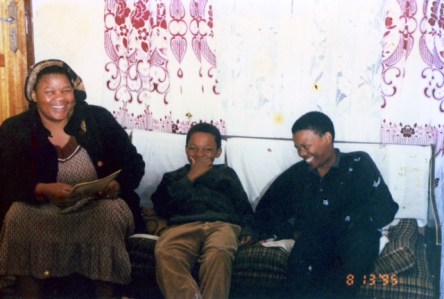
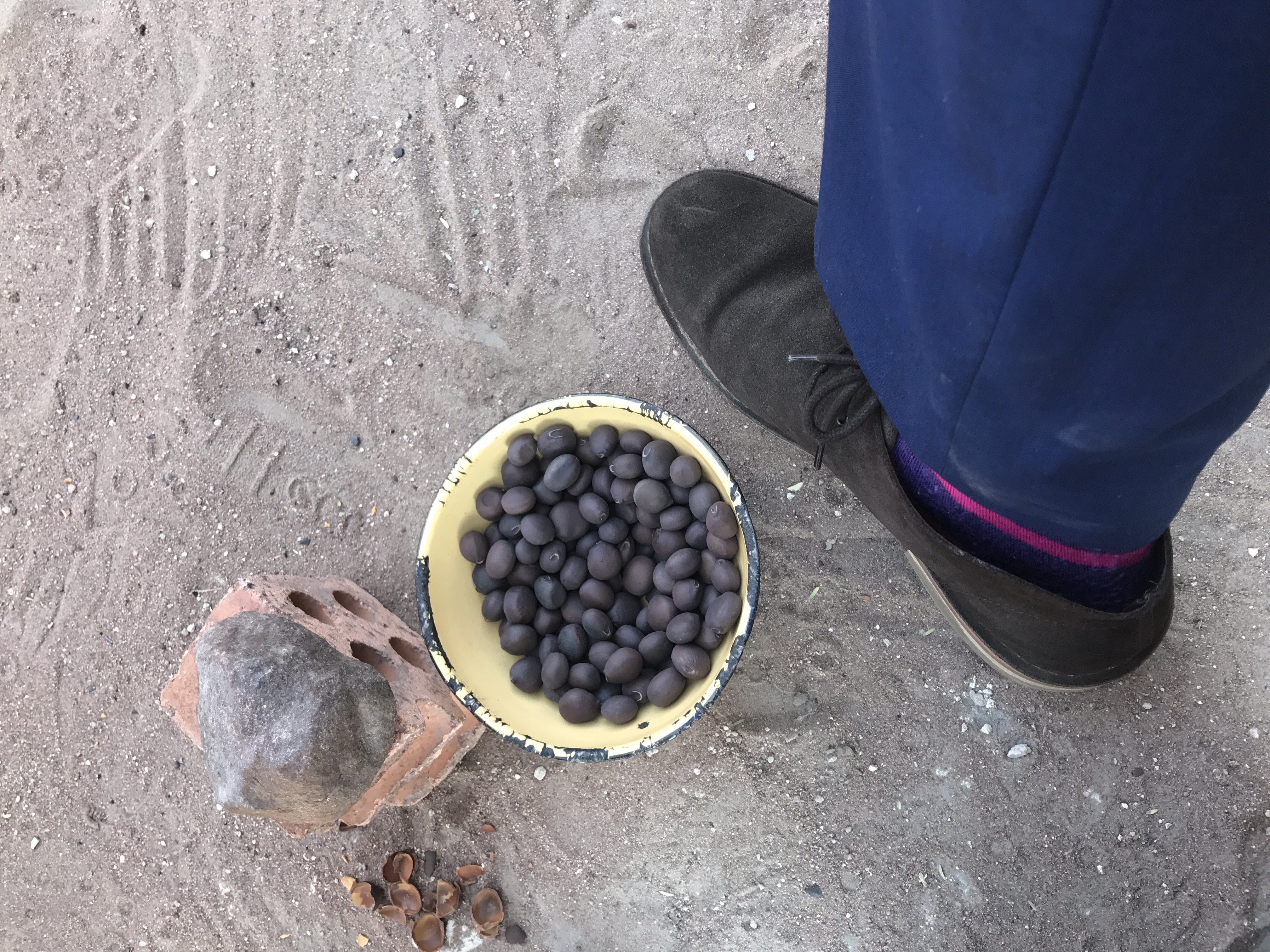
Upon my arrival in Gasita, I was particularly humbled by Respondent 1’s welcome. Following the greetings, her grandchild of about 19 years offered me a chair. The grandmother and I sat just outside the house where she asked whether I eat morama. As soon as I screamed: “thata”! A full dish was in front of me. Not only the dish but also the tools to break the delicious beans, that are perhaps similar to a mix of almonds and peanuts.
My respondent couldn’t stop laughing at my attempt to open up the morama beans. I think I failed to get the angle right. However, as soon as she corrected me it was much easier. I must have decorticated about 50 of the delicious morama. From the cracking, the nibbling and the interrogations she did assure me that the morama bean plant grows naturally in the wilderness. And as soon as it’s ready in the forest, she and other residents, mostly other women (boys & girls too), pick up the beans. Then roast them in three-legged pots in the outside fire, ’’ko matlhakwaneng’’. She emphasised that sand must be first put into the pots otherwise one would go blind as the beans would explode! My 92-year-old grandmother attests to this when she also cooked the morama beans she was given by my respondent. Actually, my respondent’s late mother knew my grandmother very well, particularly during the time my grandmother lived in Gasita around 1972.
Other than benefiting from the proteins as well as micronutrients such as calcium, B vitamins and iron (Jackson et al. 2010) she pointed out that morama is indeed a very economical cash crop as it has had a substantial impact on the livelihoods of some of the Gasita residents. She would later sell me 10 cups of the well-cooked morama, at P5 (£. 040) a cup.
This is to our special encounter and to the countless more ahead!


